
Seattle glare control film
Glare Reduction Window Film in Seattle, WA
Seattle glare comes from a low sun and a lot of water. In winter the sun barely clears the hills at midday, and in every season light bounces off Puget Sound and the lakes. Glare reduction film tones that down without making rooms dark.
 Seattle
Why Low Winter Sun Creates Glare in Seattle Homes
In December, Seattle's midday sun sits less than twenty degrees above the southern horizon. Instead of shining down onto the floor near the window, it shines straight across the room at eye level, onto screens, faces and the far wall. Even a short clear spell between rain bands can make a living room or home office unusable for an hour.
Spring and fall bring similar angles in the mornings and late afternoons. Many people working from home in Seattle know the routine: the laptop is fine until about 2 p.m. in November, then the sun drops below the eaves and the screen becomes unreadable. That pattern is predictable, which makes it easy to treat with the right film.
Glare From Puget Sound and Lake Washington
Water is a strong reflector, especially when the sun is low. Homes in Magnolia, Queen Anne and West Seattle that look west over Puget Sound get the sun from above and its reflection from below in the late afternoon. That doubled light is what makes view rooms so hard to use in the hour before sunset.
The lake shores flip the timing. Madison Park and other Seattle neighborhoods along Lake Washington face east, so glare off the water arrives in the morning. Across the lake, Kirkland and Bellevue waterfront homes face west toward Seattle and see the evening version. We plan film around the hours you actually feel the problem.
How Glare Reduction Window Film Works
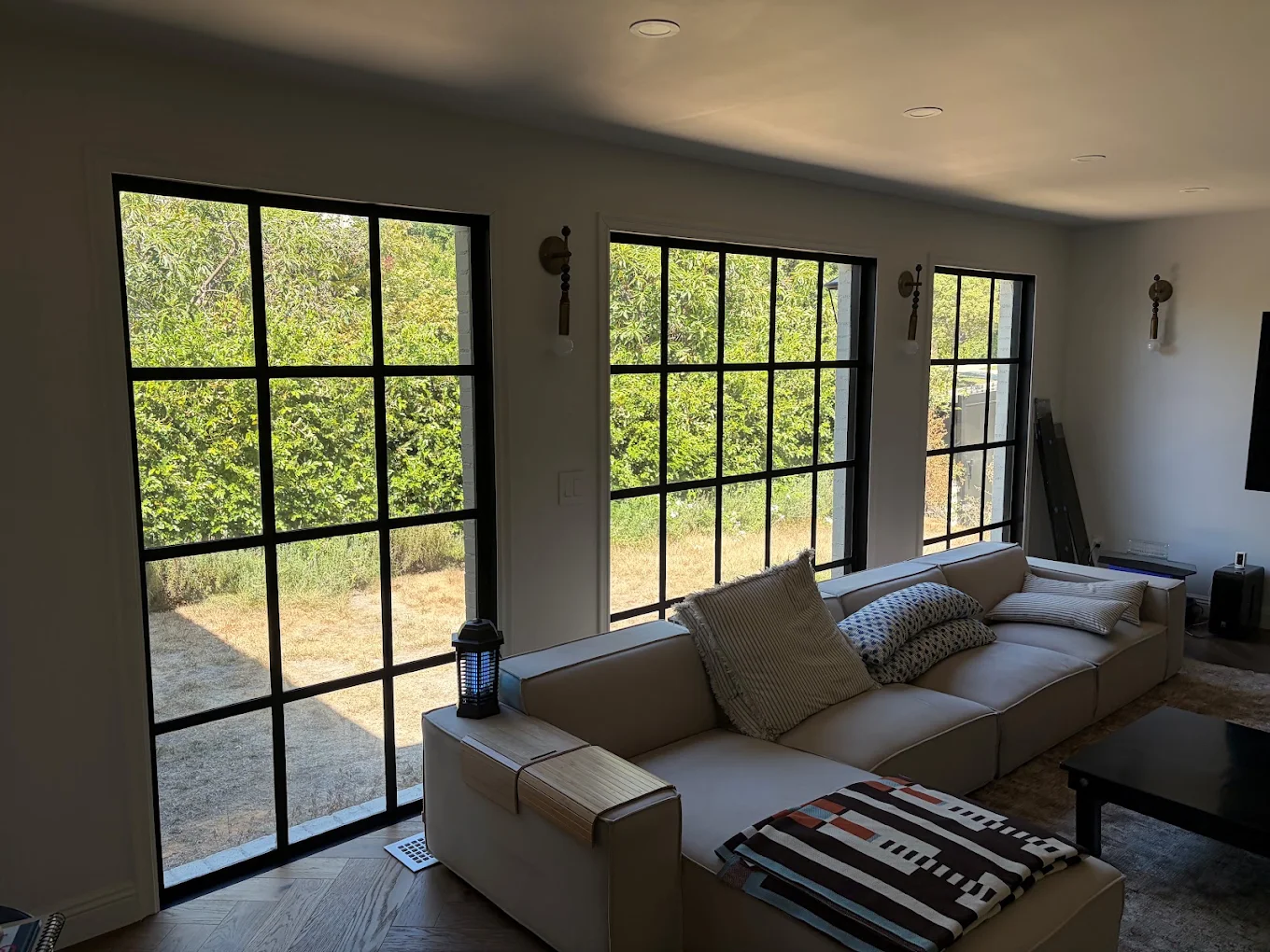
Glare is a contrast problem. A bright window behind a dark screen or next to a dim room makes it hard for your eyes to adjust. Glare reduction film lowers the amount of visible light passing through the glass, reducing that contrast. The question is how much light to cut.
Neutral gray films reduce brightness evenly without shifting colors, so the view of the water and mountains looks natural, just calmer. Light reflective films cut more glare and add some heat rejection, at the cost of a slight exterior sheen. In Seattle, we often settle on moderate films that make the sunny hours comfortable without leaving the room gloomy on the many cloudy days.
Glare Reduction Film for Seattle Home Offices and TV Rooms
The most common glare request we get is a desk placed near a window because it is the brightest spot in the house. That works most of the year and then fails on clear afternoons. Moving the desk is one option. Film on the problem window is another, and it lets you keep the desk where the light is good.
TV rooms and media rooms have the same issue, often with large sliding doors to a deck. Here we sometimes suggest a slightly darker film on the one or two panes directly behind or facing the screen, and lighter film elsewhere. That keeps the screen wall calm while the rest of the room stays as bright as it was. It also avoids paying for dark film on windows that only cause trouble a few days a year.
What Glare Reduction Film Does in Seattle Rooms
Readable Screens During Low Seattle Sun
By lowering incoming brightness, glare film makes laptops, monitors and TVs readable when the winter sun drops below the eaves. Blinds can stay open, so you keep your view and natural light while working.
Glare Film for Puget Sound and Lake Views
Neutral films reduce the glare off Puget Sound and the lakes without washing out color. The Olympics and Cascades stay visible on clear days, and the water does not turn into a blinding sheet at sunset.
Less Eye Strain in Glare-Prone Seattle Rooms
Constant squinting and adjusting between a bright window and a dim interior is tiring. Evening out the light makes rooms more comfortable to sit in for long periods, whether reading, working or watching TV.
Glare Film With Heat and UV Control
Most glare films also reject a share of solar heat and nearly all UV. The same windows that cause glare in winter tend to cause heat in summer, so one film often addresses both seasons.
Glare Reduction Window Film Questions in Seattle
Will glare reduction film make my room dark on cloudy days?
It reduces brightness on every day, so the darker the film, the more you notice it on overcast days. For most Seattle homes we recommend moderate films that still let in plenty of light. Samples on your window help you find the balance.
Can I put glare film on just one window?
Yes. Many glare jobs involve only the one or two windows causing problems. If those windows are visible from the street next to untreated ones, we choose a film that looks close to the rest.
Will the film stop lamp reflections on a TV after dark?
No. After dark, reflections come from lamps inside the room rather than from the window. Glare film addresses daytime sunlight. For nighttime reflections, lighting placement and shades are the fix.
What is the difference between glare film and privacy film?
Glare film reduces brightness but stays see-through. Privacy film blocks the view, either by frosting or by reflecting. Some reflective films do both during the day, but they lose privacy at night.
Window film quote
Glare Reduction Window Film Quotes for Seattle Homes
Tell us which room has the glare problem, what time of day it hits and which way the window faces. A photo taken at the worst moment through the quote form is the most useful thing you can send.
Prefer email? info@windowfilmseattle.pro